

CES 2005 Clement Perry
CES 2005...Thoughts
Lost Wages, Nevada.
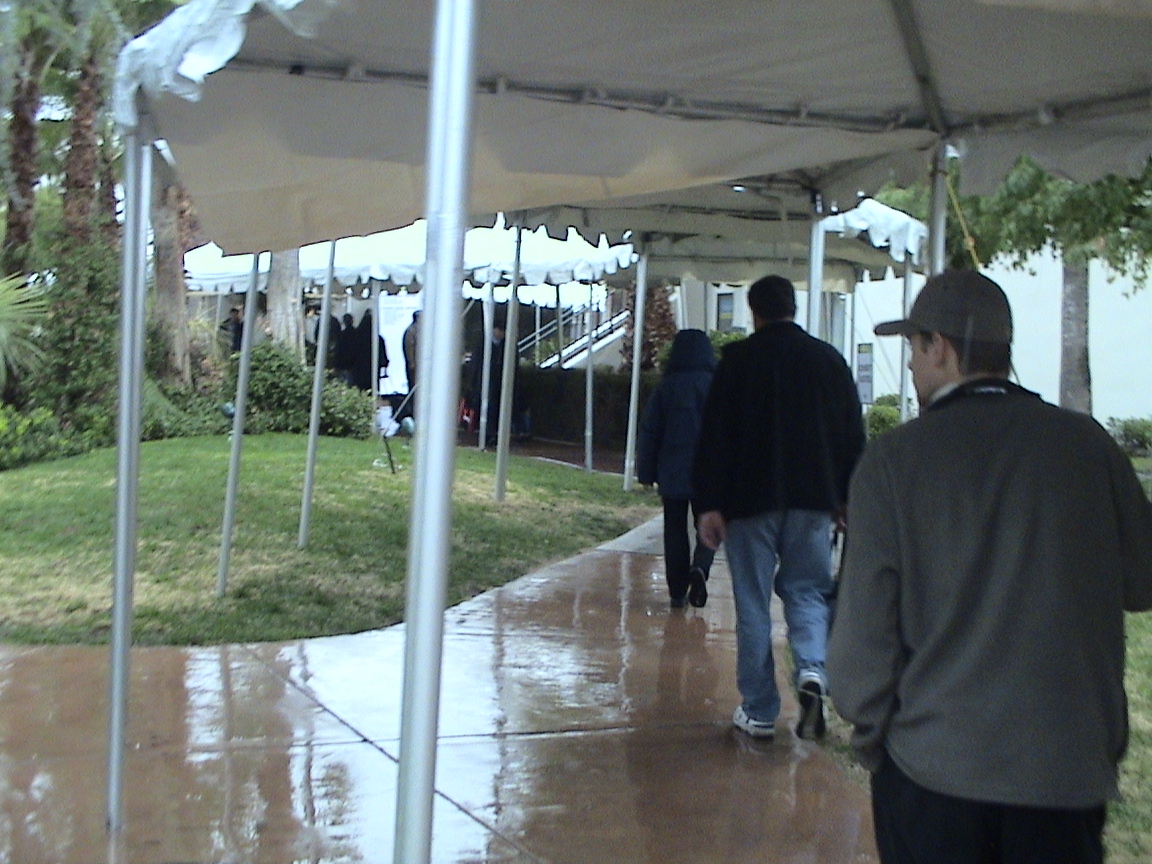
As previous shows held under Nevada’s warm desert sun offered a great escape for those living on the cold eastern seaboard this time of year, this event proved quite different. First, it rained! Then, right here in the middle of the desert, it snowed! Right after one of the worst natural disasters in history took place on the day after Christmas, we, over here, gathered ourselves, regained our composure (even as the the death toll grew), and in less than two short weeks flew off for CES 2005. As a personal survivor of 9/11, I felt a sense of guilt. But, at the same time, I’ve since learned, as callous as it may appear, moving forward, staying active and sticking to appointments is one of the best forms of therapy and thus recovery. We really have no choice except to go on and do the best we possibly can.
However in a strange sort of way the weather served as an ominous reminder. For me, as well as everyone I spoke with, it served as a constant reminder to keep things in their proper perspective. Life, just like the weather, can be cold, wet and dreary… right here in the middle of the desert too.
Gratitude restored!
My hunch is the gang made it there and back with everything intact except their bill folds. I know I lost again at the blackjack table in what only seemed like a matter ofminutes. I told myself I wasn’t going to gamble again (lost quite a bit last year too!), but I just had to give it a another try. I mean there’s got to be more to life than just going to ‘Vegas and chasing behind exotic electronics. Yeah, lose money and then chase behind exotic electronics.
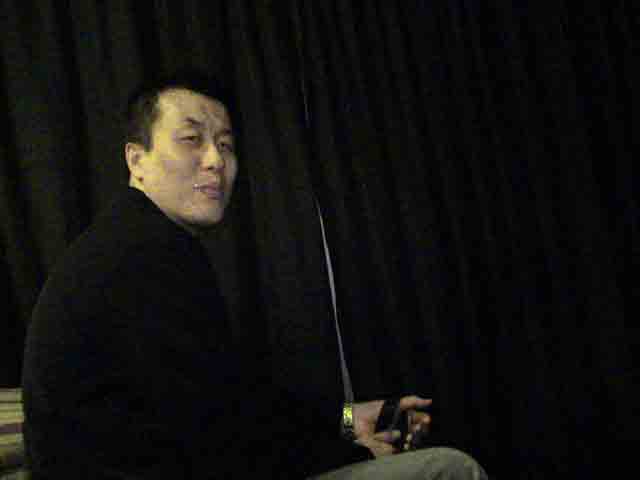
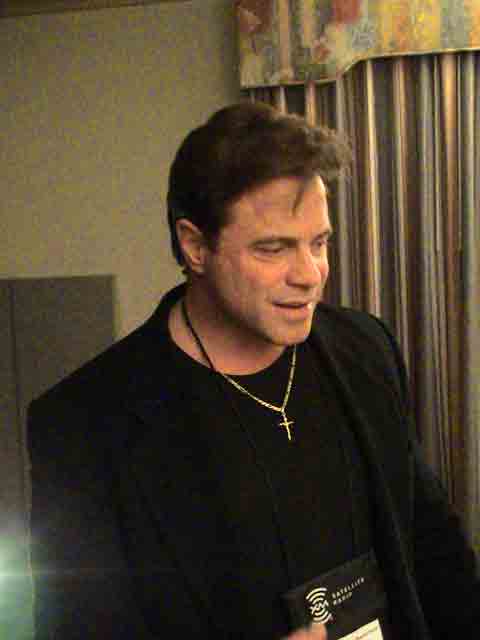
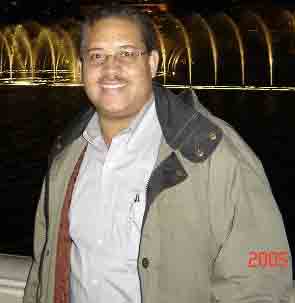
CES 2005 got serious ST coverage from Dave Thomas, Frank Peraino (above center), Dan Dzuban, Key Kim (left), Mike Wright, Ron Nagle, Courtenay Osborne (right) and yours truly. Besides Key Kim everyone lives quite a bit away so it was nice seeing them all under one roof.
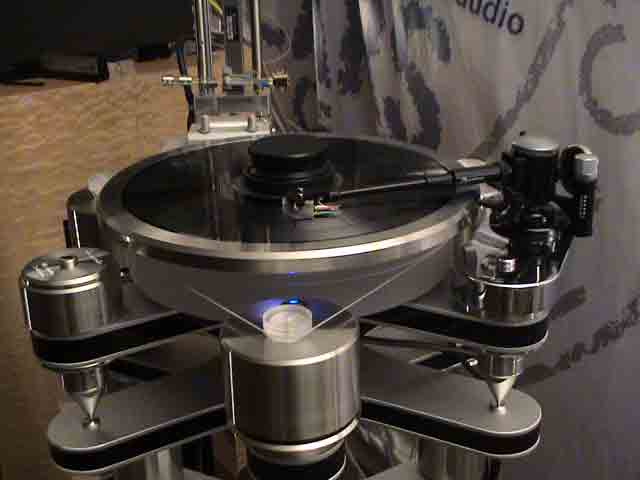
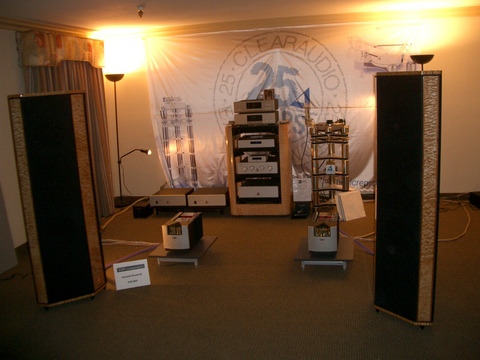
Frank Peraino couldn’t keep his eye on the camera for good reason: he was smitten by the looks of the new Clearaudio AMG Reference turntable nestled behind a beautiful pair of ESP loudspeakers located in the Musical Surroundings room at Alexis Park.
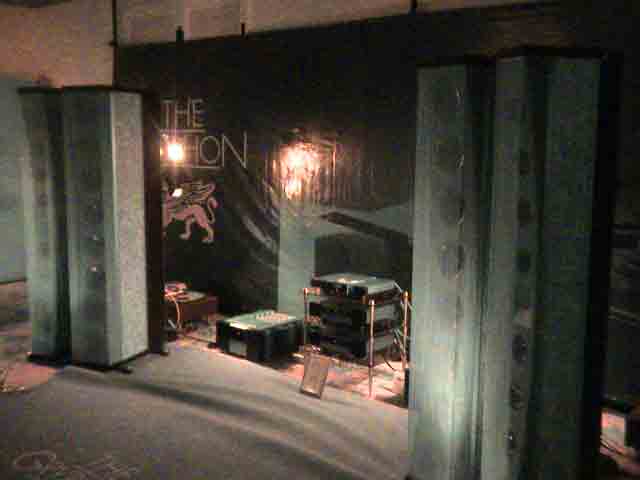
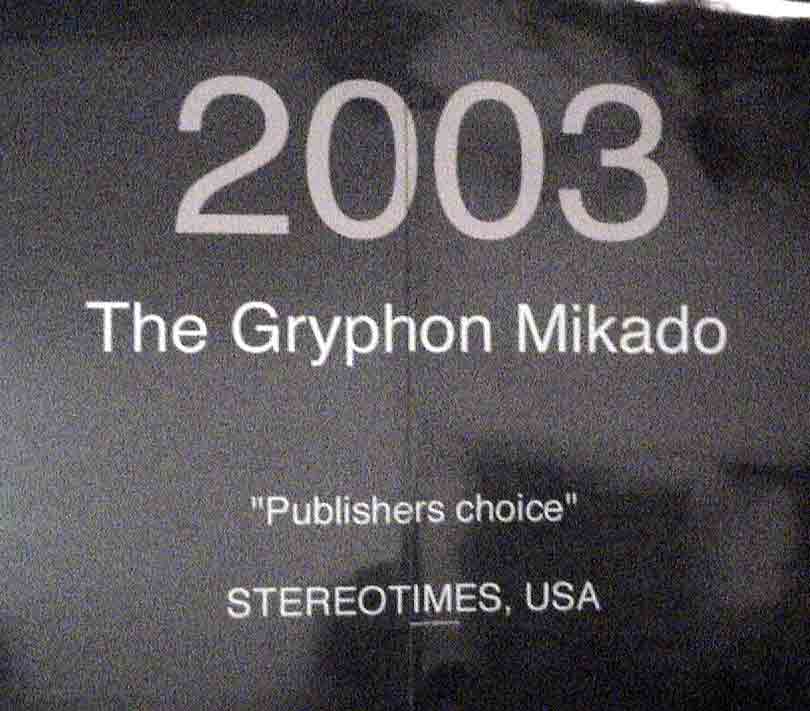
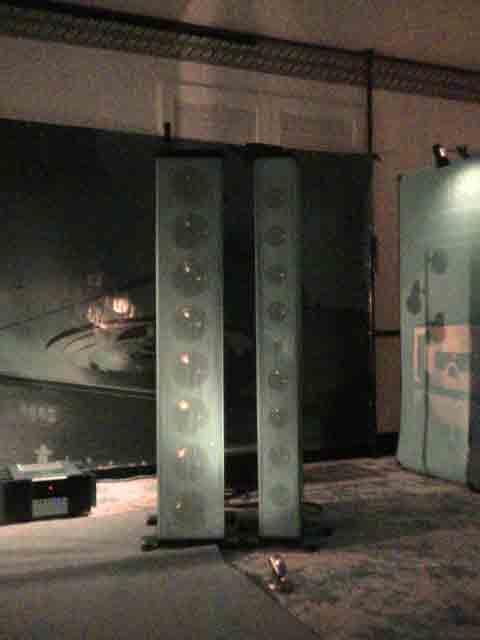
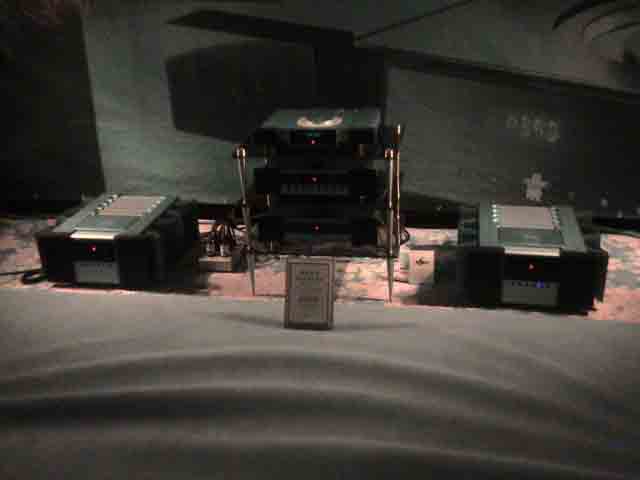
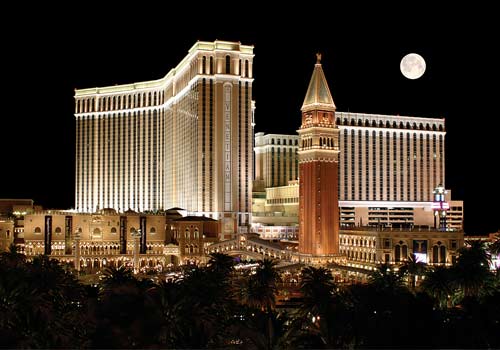 Celebrating 20 years of high-end audio designs, Gryphon Audio put on a hell of a display at T.H.E. Show. Gryphon has garnered favorable reviews the world over. They displayed all the accolades received over a 20-year span along a huge wall. Considering I’ve lusted after this product line since 1995, it was quite humbling to admire Stereo Times’ Publisher’s Choice! among those magazines quoted (above right).
Showcased this year was the awe inspiring Poseidon Reference loudspeaker ($130,000). Standing 6 1/2 feet tall and weighing more than 850 lbs per side the sound these loudspeakers produced via some help from a pair of relatives in the Gryphon Antileon monoblocks ($50,000), and preamplifier, the Sonata Allegro ($12,500) was absolutely stunning.
This four-way twin-tower-of-power loudspeaker boasts special features such asConstant Phase crossover for perfect phase at all frequencies at all times; System response 6 – 40,000 Hz, + 3 dB (depending on Q setting and room size); Separate active crossover network for each channel isolated in bass tower; and lastly, a remote control for Q setting, Bass Level and Low Cut.
I customarily use some of my favorite jazz music burned to a single CD and sitting in the sweet-spot listening back through Flemming Rasmussen’s latest and most auspicious design only reaffirmed my initial thoughts and fears: it is virtually impossible to get this fidelity of sound from a simple two, three or four-way loudspeakers. The sound that came from these loudspeakers was so huge in terms of volume of air, so rightfully accurate in terms of instrument size and so utterly easy on my ears, I realized again, as I did before in previous years listening to the huge VR11s ($125,000), and 2003’s show that featured the Wisdom Audio loudspeakers ($250,000), that in order to get this type of freedom you need space and lots of green paper.
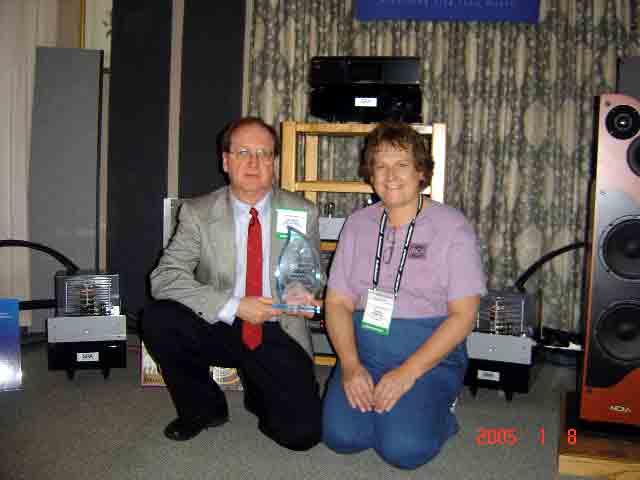
deHavilland’s designer Kara Chaffe (right) and marketing director George Kielczynski proudly displayed their Editors Choice! 2004 Most Wanted Award. Using the new 30-watt 845-G amplifiers and an antique (circa 1963) Ampex reel to reel tape deck strapped to a pair of Nola Viper loudspeakers. God only knows how Kara came up with all the pre-recorded music but somehow she did. I was surprised to see and hear Jimmy & Wes – The Dynamic Duo on one of those spools of tape.
The room, using PranaWire from stem to stern, sounded delightfully open and considering the loudspeakers, a far cry from the setup last year featuring a pair of Alon Pegasus loudspeakers. Thank God, Kara set this room using an unusual approach of both adjoining front and sidewalls. BTW, What’s Alon spelled backward? Nola, the name of Carl Marchisotto’s new company.
Further thoughts…Tact Audio

It was a quite a nice surprise to see Tact Audio back in the Alexis Park high-end habitat and away from the convention center. Tact’s chief designer Radomir Bozovich (back right) takes time out to pose for a photo with devoted Tact users John Hsu (right) and Key Kim (behind me). This was indeed a special occasion for it was the unveiling of Tact’s all new “Boz” reference line of multi-channel digital amplifiers shown below (price TBA).
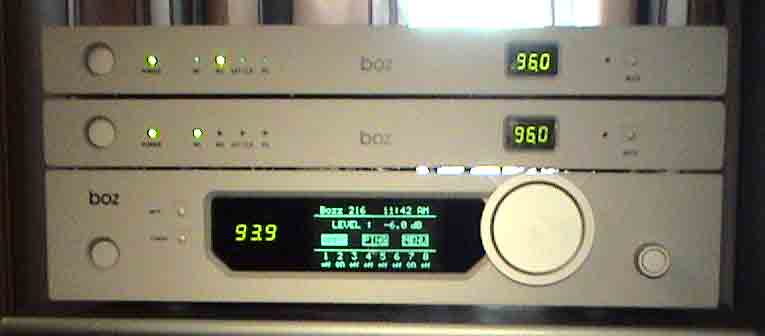
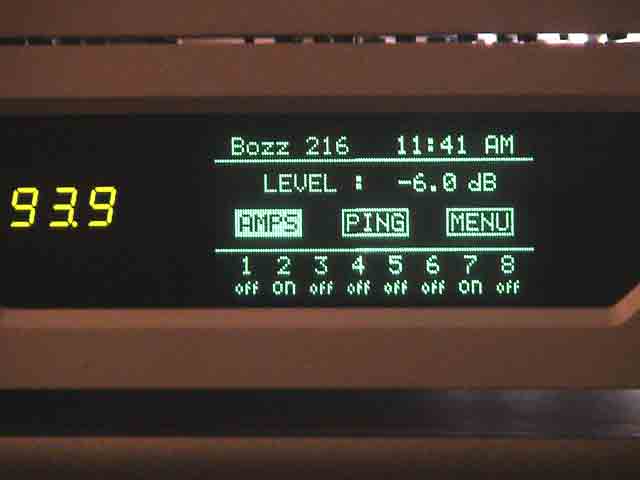
This very well laid out, dual-chassis design, boasts separate 110/220 V module with its own line conditioning; a totally new design based on LVDS (low voltage balanced signal technology). Sporting the latest Texas Instrument floating point DSPs for computer-less crossover design this new statement in digital design purports frequency resolution at the equivalent of 1 Hz and internal crossover versatility from 10 Hz and 24 KHz. This sophisticated crossover filter package offers low-pass, high-pass and band-pass design with filter slopes of 6 to 60 dB/octave. Band-pass filters can be designed with different slopes at the low and high cutoff frequency.
Upgradeability of up to 16-channels of sophisticated digital amplification, rated at 200/watts, has finally arrived (ever heard of 11.5 surround sound? Neither have I, but if it does show up, Tact will be ready). Other features include external clock sync capability (Big Ben owners rejoice) and one-touch-channel identification in case the “Boz” sees duty in a multi-channel, multi-driver setup you can immediately identify where each amp is connected through the touch of a button located on the front panel. Though slender in size the weight of each module is about 75 lbs due to separate specially wound, heavy duty torodial transformers for each channel.
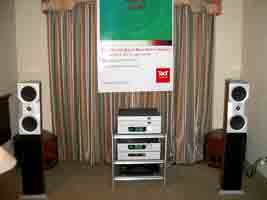
I sat in the room and heard briefly what I thought was a decent sounding setup using the Tact Audio MH1 loudspeakers made by DALI. Tact subwoofers are loaded into each corner of the room and work quite well in that position when room corrected. Decent sound may be good to some folks but based on what I have learned and know, Tact audio can sound world-class. I find it truly a statement grade product when properly setup.
I think the room promoted more of what Tact does as a room correction device rather than as a music-reproduction product.
On my soapbox..
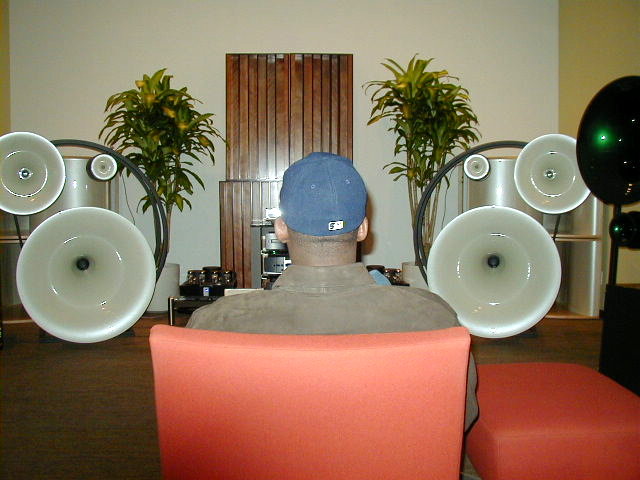
I look forward to the day when Tact Audio will be shown alongside well established companies that make high-efficiency loudspeakers. Avantgarde loudspeakers come to mind or how about a nice pair Rethm loudspeakers? I sat at length in the Rethm/Art Audio/Stealth Audio room at Alexis Park and was captivated by the musicality of these lowther-driven loudspeakers. Designed more for the musical than the visceral, these little sweethearts had me wondering aloud “why on earth isn’t Tact using loudspeakers like these?” I say this because most folks that don’t own Tact, or listen to all the hearsay, feel this is just another typical digital [read: lacking musicality] amplifier. That’s not true. The Tact, like many horn and lowther based designs, are built around their purity rather than their power rating. 150 watts per channel is not really a lot of power in the digital scheme of things. Especially when you consider the 350 to 1000 watts-per channel ratings of some other designs claim. This is why I say in the world of digital amplifiers the Tact is the S/E equivalent. As a matter of fact, the trend of switching from S/E tube based amplification to Tact digital has actually begun in France. Want proof? Okay…
On my recent trip to Paris back in the fall of ’04, Franck Tchang, designer of the Acoustic Resonators asked Key Kim and I if we were interested in listening to a system that was truly “price no object” and of course you know what the answer to that question was…Hell Yeah!
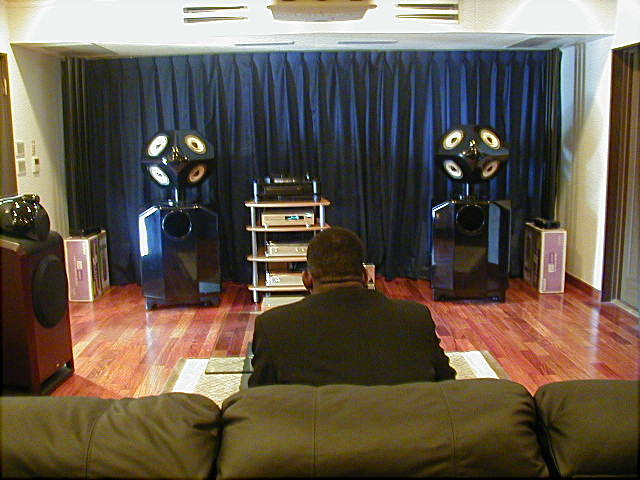 First off, my experience in listening to a wide variety of systems has grown considerably over the years with all the traveling I’ve done and setups I’ve personally helped install or simply sat and evaluated. From Sea Cliff, NY (the home of Harry Pearson) to the seashore in Aarhus, Denmark (home of Peter Lyndorf of Tact Europe) to Osaka, Japan to hear the Zanden Audio/Tutankhaman loudspeaker combination (photo right). It doesn’t hurt to have a dozen or so writers, friends and audiophiles that live nearby who seem always in dire need of a second opinion.
That said, nothing could have prepared me for what I heard in the south of France at the home of Jean-Yves Kerbrat.
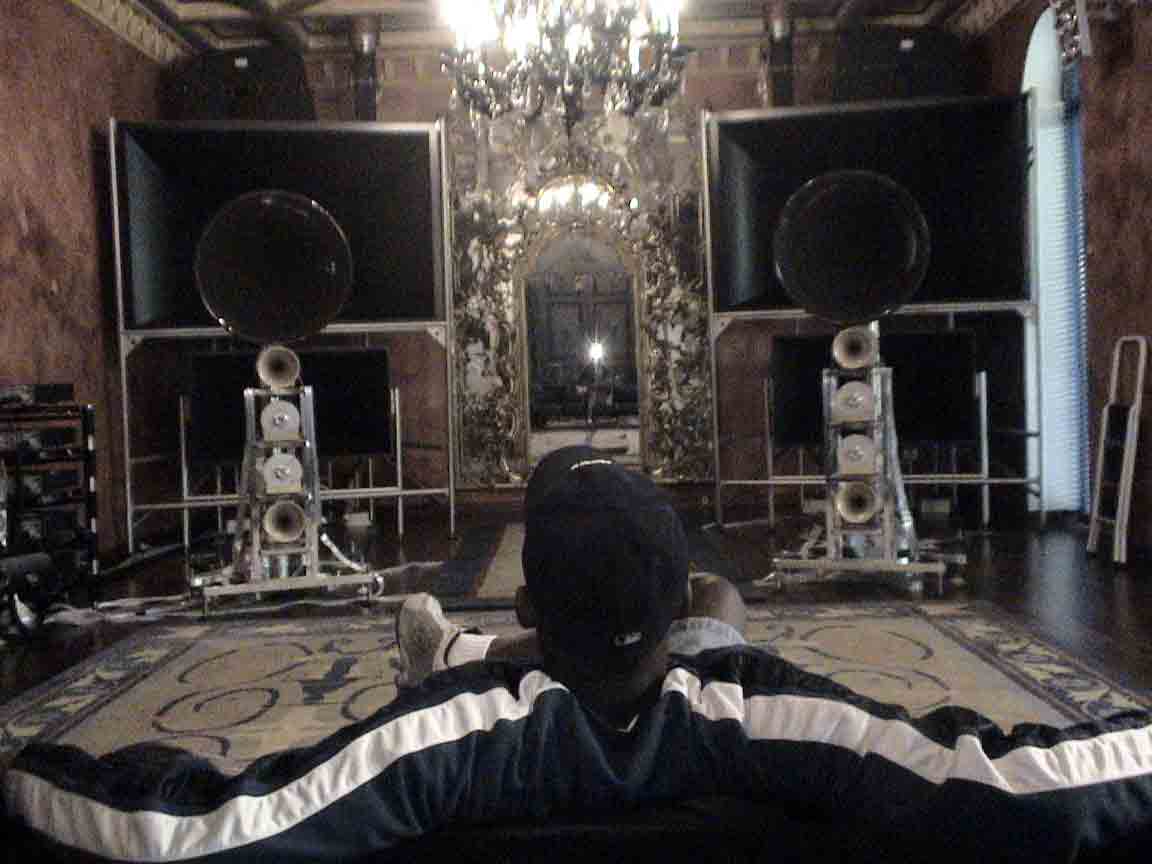
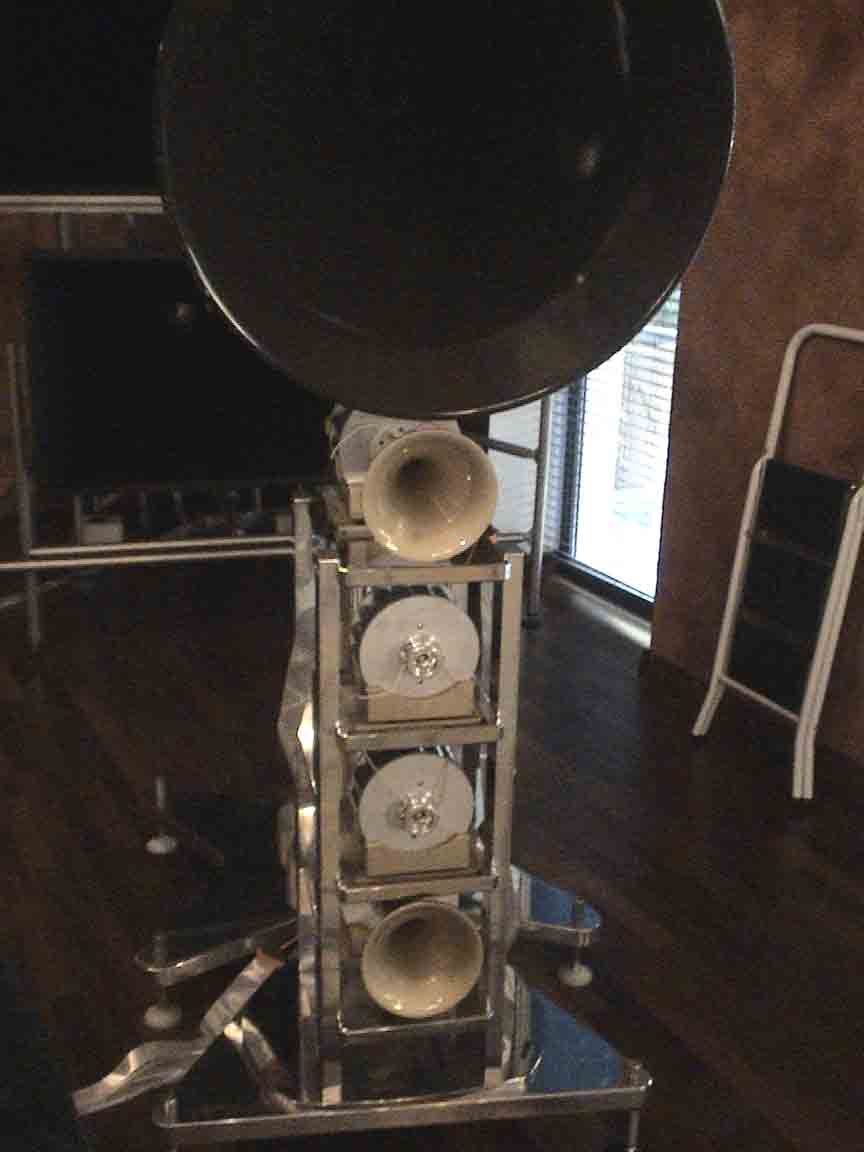
The loudspeakers were custom made and the first I’ve seen or heard that uses five-way high-efficiency drivers and horns exclusively. Each driver, made by a company called Goto and probably the most expensive in the world, were mounted on a custom made rack designed by Jean-Yves himself. Both design and build quality was impeccable. Most imposing was the ALE Bass Horn, ALE 160D driver (weight 100 kg). These monsters are rated to go down to 20 Hz easily and are the biggest subwoofers I have seen. They literally went all the way up to Jean-Yves’ ceiling.
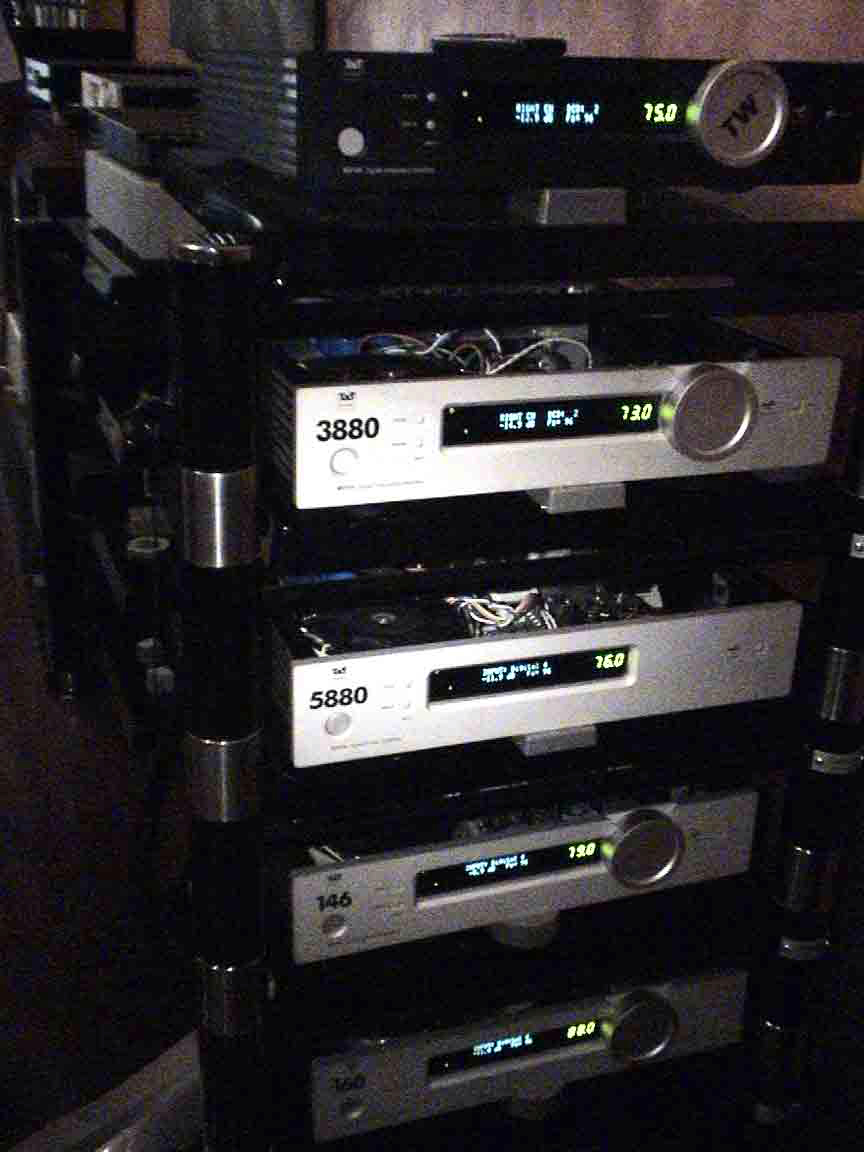
Five Tact 2150 amplifiers were used to drive each pair of Goto drivers independently using digital crossover slopes selected from the Tact 2.2x preamplifier/room correction device. All cabling was ribbon stranded and all A/C power cords used were Shunyata Research Anaconda Vx. A number of Shunyata Hydras graced the room while in a separate building housed more A/C products from Accuphase. Granted, there was a great deal of modifications that were done to both the Tact 2.2x’s as well as the amplifier’s power supply, digital input receiver along with swapping out certain capacitors for better Blackgate types. However, from what I was told, in stock form the Tact proved their worth and ended up replacing a super expensive set of monoblock amplifiers (4 pair!). In terms of digital front ends, this was probably the most sophisticated I’ve ever had the pleasure of seeing together linked to one system.
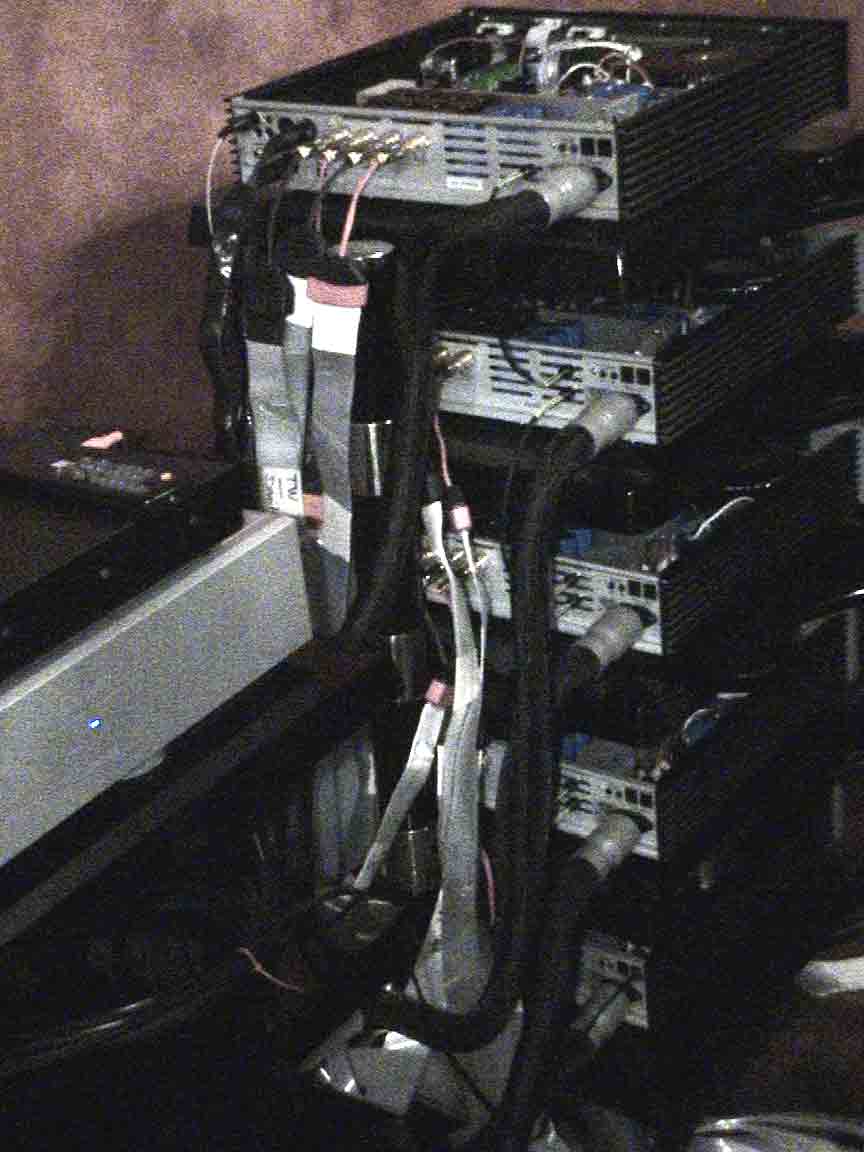
More importantly, I heard a all digital setup that was the best sound I had ever heard. I realized right then and there that digital is the future and I was delighted to be a part of it.
Off the soap box.
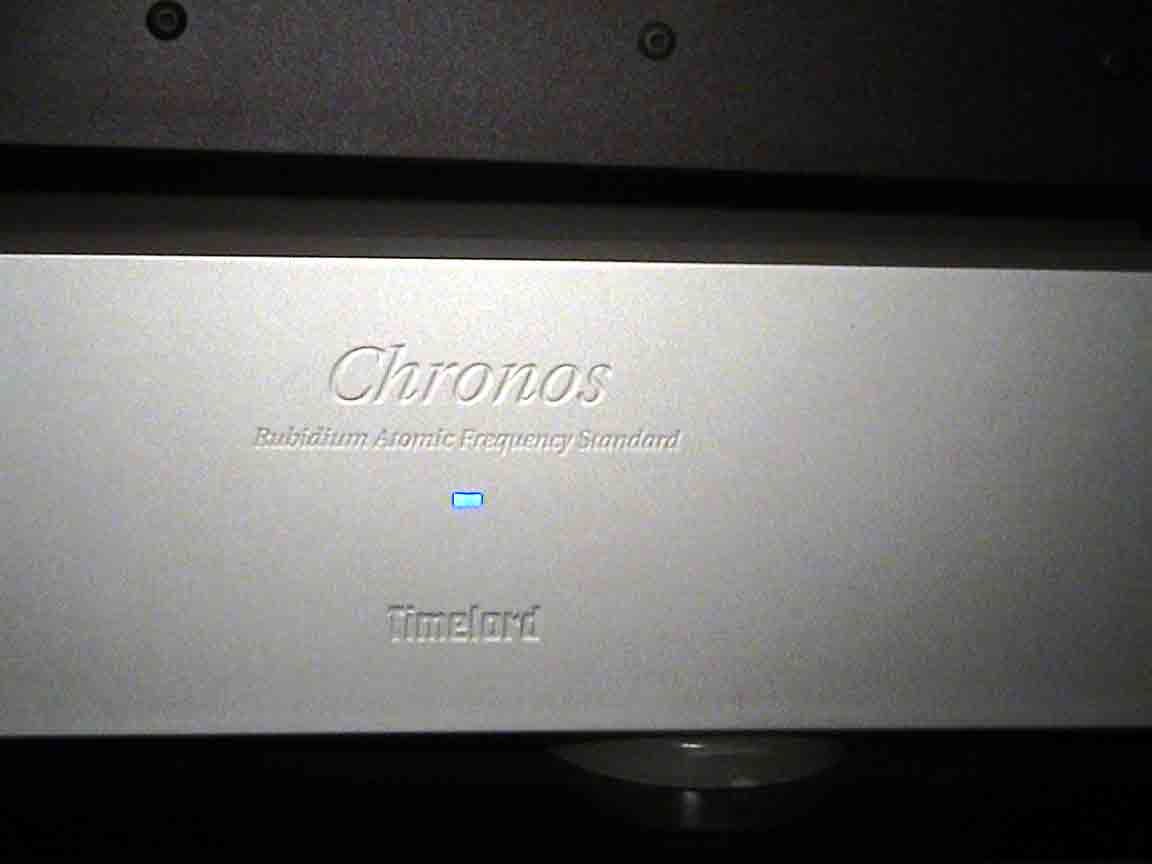
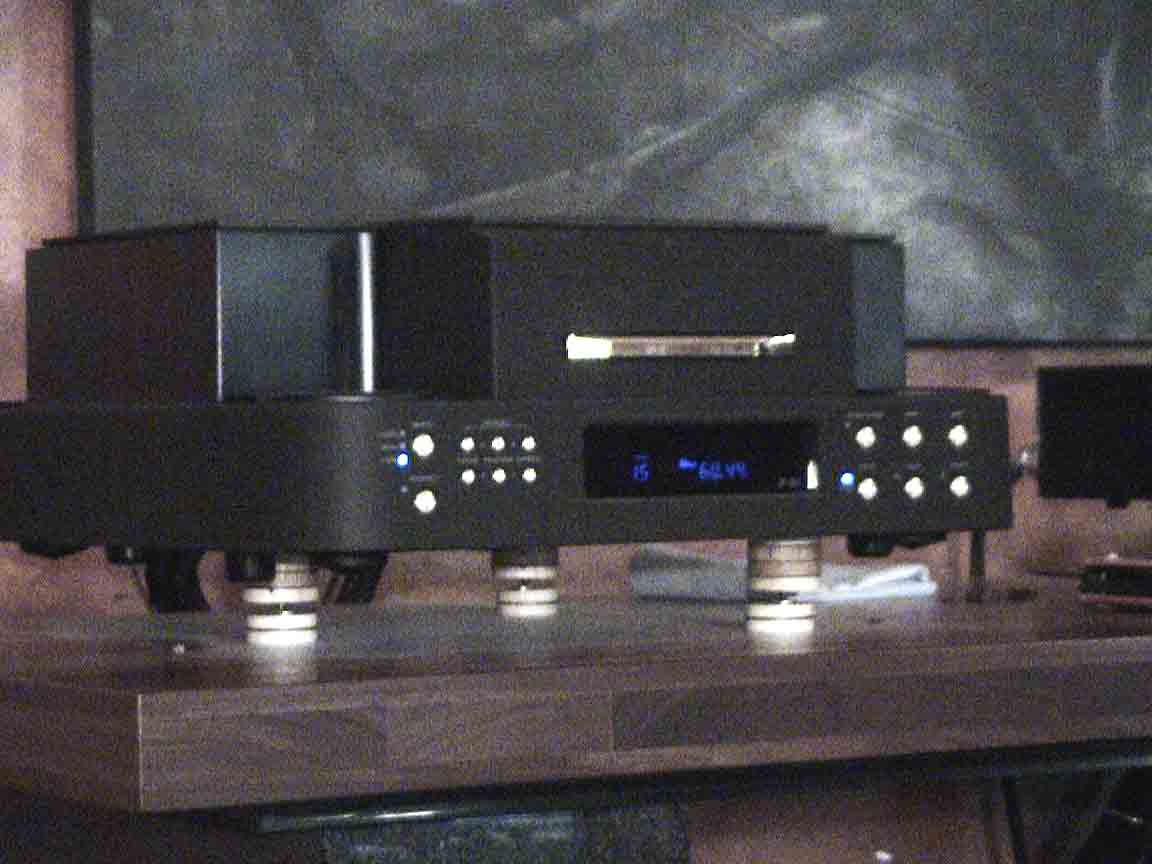
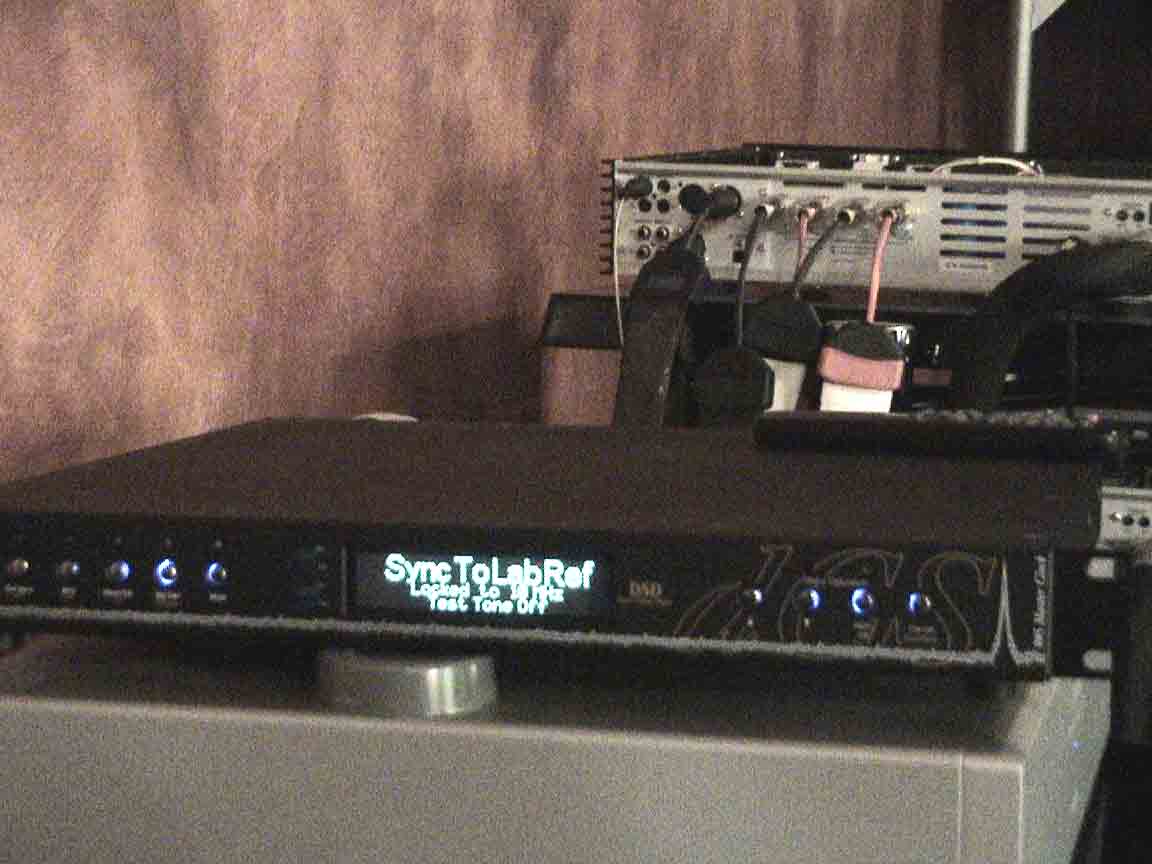
This is the first time I’ve seen or heard the Esoteric P0s. As good as it is said to be, it was slaved to a Timelord Chronos external clock built by dCS for their pro series. There was also an audiophile grade dCS 995 Upsampler sending pure unadulterated 96 kHz signal to the modified 2.2x. In terms of setup, attention to detail and overall impression, I was left dumbfounded before the first song came on. There was simply nothing left to question…except that is how it sounded.
Never in my audiophile experiences have I seen a setup of such proportions. As an aside, very seldom, if ever, can you hear an excellent sounding audio system in a wealthy person’s home. Usually when you’re this successful there’s little time to sit and listen to your stereo much less tweak. It’s too easy to drop a nice piece of change on something super expensive and expect it do what exactly what a reviewer said. Fine tune? Tweak? You’ve got to be kidding. Not here.
From the first track Jean-Yves played I knew I was listening to something uniquely special. This wasn’t some rich guy experiment gone awry. I was sitting before something grand indeed. Something that I could not immediately identify. There was an exquisite sense of beauty to the music that I could instantly identify with but will admit have never duplicated in my, or anyone else’s space. There was a rightness to the sound, a freedom of colorations all box speakers emit, that through some classical songs sounded like the instruments were really in the room. To such a degree that for the first time in my audiophile career I felt sick in my stomach. Can’t describe it but there is such a thing as something so good, so magnificent, so beyond what you thought was physically possible, that you can actually have a physical reaction. I had this reaction only once before and it was the first time I heard a high-end system. That experience so changed my life that I literally went home and unplugged my Bose 901’s, Carver preamp and Phase Linear amplifier, put them in their original cartons and sold them immediately at a store that was recommended. I didn’t go home after my trip and throw a fit. I realized that my system is pretty well along and couldn’t possibly sound like what I heard in the south of France. It was just physically impossible.
Ascendo/CAT/Virtual Dynamics
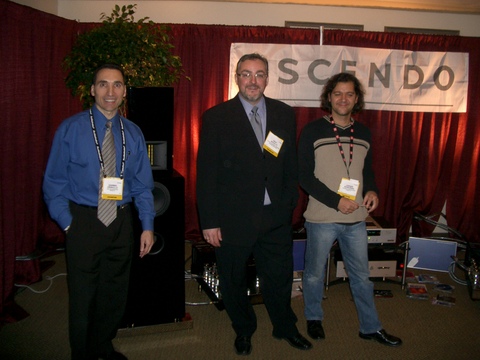
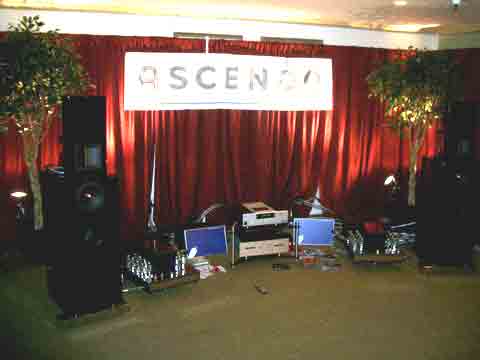
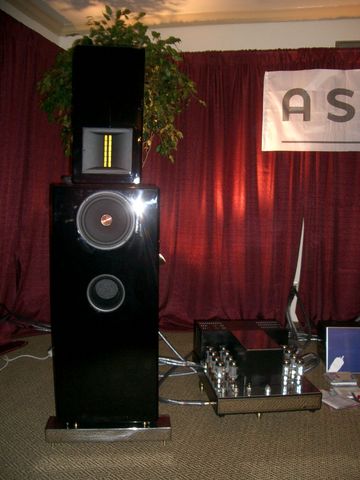
The Ascendo System M ($45K in chrome stand) flanked by a beautiful pair of CAT JL-3 monblocks ($30K) was eye-catching to say the least. Centered on a Sistrum platform was the legendary CAT Ultimate pre ($7K) and the up and coming Harmonix Reimyo CD Player ($14K). The room was put together by Avatar Acoustic’s prez, Darren Censullo (left). Standing next to Darren is none other than Virtual Dynamics guru himself, Rick Schultz and to the right of Schultz is none other than Antonio Bandaras’ twin Jurgen Scheuring of Ascendo GmBH.
The room proved to excel dynamically while never relinquishing its luscious midrange and wonderfully open soundstage (tubes? you bet!). Now the System M loudspeaker is a show-stopper based on its exotic stand and hovering tweeter section. I personally own a pair of System Ms and find their sound quite remarkable when paired with Schultz’s new top-of-the line VD Revelation Series cables. These cables were used here throughout as well and the results were what I would have expected: full of life with a tactile sense of image specificity. Bravo!
Luminance/Virtual Dynamics/Sistrum/Acoustic Systems
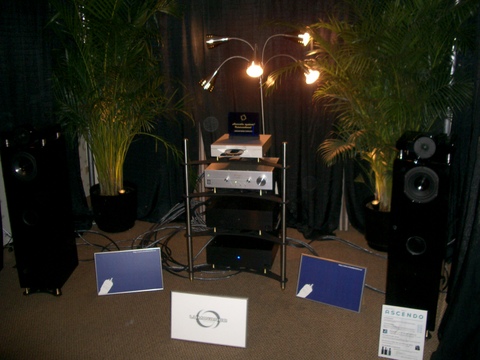
This room boasted yet another design from yes, that’s right Rick Schultz in theLuminance Audio Threshold amplifier ($3K). Luminance is a spanking new amplifier company co-founded by Schultz of Virtual Dynamics and Steve Kaiser, formally of B&K (he and John Beyer designed the famous B&K ST-140). The newly designed Threshold (rated at 150/w per channel) incorporates Schultz’s Speed of Light technology (SOL) and K


Stereo Times Masthead
Publisher/Founder
Clement Perry
Editor
Dave Thomas
Senior Editors
Frank Alles, Mike Girardi, Russell Lichter, Terry London, Moreno Mitchell, Paul Szabady, Bill Wells, Mike Wright, and Stephen Yan,
Current Contributors
David Abramson, Tim Barrall, Dave Allison, Ron Cook, Lewis Dardick, John Hoffman, Dan Secula, Don Shaulis, Greg Simmons, Eric Teh, Greg Voth, Richard Willie, Ed Van Winkle, Rob Dockery, Richard Doron, and Daveed Turek
Site Management Clement Perry
Ad Designer: Martin Perry
Be the first to comment on: CES 2005 Clement Perry